Arrests.org IN is an online platform that aggregates publicly available arrest records from across Indiana. By consolidating data from law enforcement agencies, court systems, and state-maintained databases, Arrests.org IN provides centralized access to public arrest information in a user-friendly format.
The platform serves individuals and organizations who need reliable public safety information for background checks, tenant screening, employment decisions, or personal research. By making these records easily accessible, Arrests.org Indiana supports transparency and accountability within Indiana’s justice system.
Accessing Arrests.org IN
Accessing Indiana.Arrests.org is simple and convenient from any device with internet connectivity:
- Desktop Users: Navigate to the website through your browser’s address bar. The full desktop interface provides optimal viewing and navigation of arrest records.
- Mobile Users: Arrests.org IN is fully responsive on smartphones and tablets. Simply enter the URL in your mobile browser for seamless access on smaller screens.
Account Setup
While browsing arrest records doesn’t require registration, creating an account may unlock helpful features such as saved searches, notifications, and advanced search tools. Registration is straightforward—provide an email address and password, then complete the verification process to secure your account.
Troubleshooting Access Issues
If you experience technical difficulties:
- Refresh your browser if pages don’t load properly
- Clear cache and cookies to remove outdated stored data that may interfere with functionality
- Update your browser to the latest version for optimal compatibility
- Try a different browser if problems persist
For unresolved issues, contact the Indiana Arrests org support team with details about the error, your device, and browser type.
Searching for Arrest Records on Arrests.org, Indiana
How to Search Indiana Records
After selecting Indiana from the Arrests.org main site, follow these steps to find arrest records:
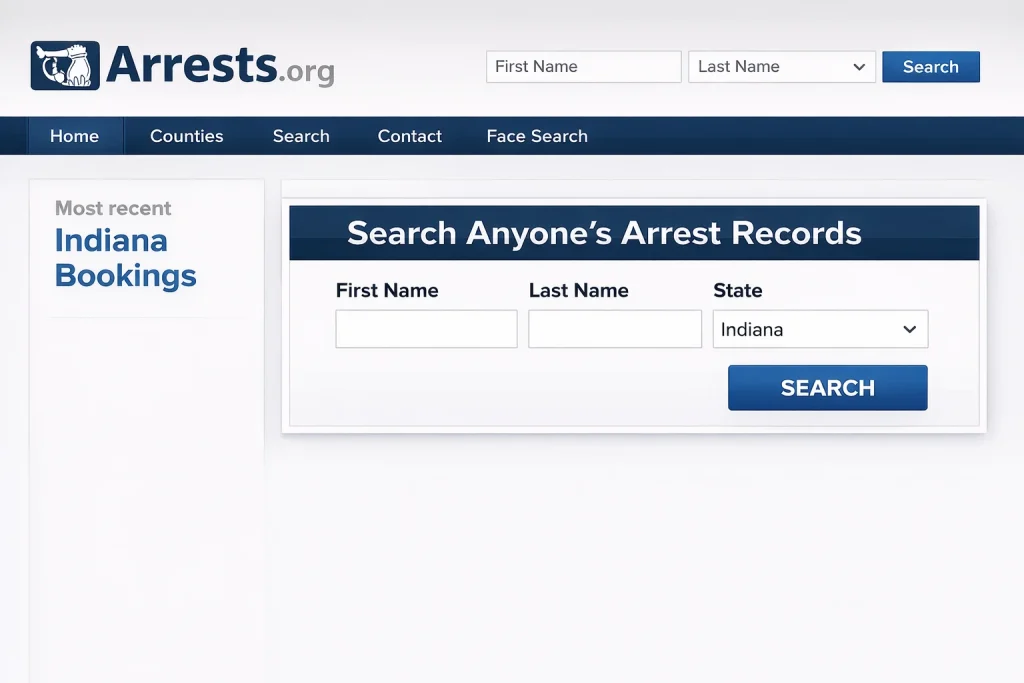
Step 1: Access the Indiana Section
- Navigate to Arrests.org
- Click on Indiana from the state selector
- You’ll be redirected to the Indiana arrest records portal
Step 2: Use the Search Function.n The search functionality is designed for efficiency and precision:
- Enter search terms in the main search bar (name, location, arrest date, or charge type)
- Apply filters to narrow results by age, geographic area, or offense category
- Review results that include mugshots, charges, arrest dates, and case statuses
Advanced Search Features
Advanced filters enable highly specific searches:
- Date Filters: Locate arrests from specific dates or time periods, excluding irrelevant entries.
- Location Filters: Focus searches on particular cities or counties, useful for community safety research or localized background checks.
- Charge Type Filters: Narrow results by offense category (misdemeanor vs. felony) or specific criminal charges.
- Age Filters: Refine searches based on the age of the individual at the time of arrest.
Search Tips for Best Results
- Use accurate spelling to avoid incomplete results
- Combine multiple filters to pinpoint specific records
- Start with broader searches, then narrow with additional criteria
- Avoid overly vague keywords that may return thousands of unrelated results
Understanding Arrest Records on Arrests.org IN
Information Included in Records
Each arrest record typically contains:
Personal Identification: Full name, date of birth, and gender.er Arrest Details: Date, time, and location of arrest. Charges: Specific allegations filed (misdemeanor or felony classification). Mugshots: Photographic identification of the arrested individual. Agency Information: Name of the arresting law enforcement agency.y Case Status: Current legal standing (pending, dismissed, resolved)
Interpreting the Data
Charges vs. Convictions: An arrest record shows allegations at the time of arrest, not proof of guilt. Many arrests don’t result in convictions.
Case Status Definitions:
- Pending: Case is under legal review or awaiting trial
- Dismissed: Charges were dropped with no further action
- Resolved: Case concluded through conviction, acquittal, or plea agreement
Severity of Charges:
- Misdemeanors: Less serious offenses with lighter penalties (fines, short-term jail)
- Felonies: Serious crimes carrying harsher consequences (long-term imprisonment)
Additional Case Details
Some records include supplementary information such as bond amounts, court dates, or sentencing details. These elements provide context about case progression and potential outcomes.
Additional Public Records on Arrests.org IN
Beyond arrest records, Arrests.org IN provides access to related public information:
Jail Rosters
Real-time lists of individuals currently detained in local facilities, including booking dates, charges, and bond information. Useful for tracking custody status and monitoring public safety.
Court Records
Detailed documentation of legal proceedings, including case numbers, hearing dates, rulings, and sentencing outcomes. These records show the full progression from arrest through judicial resolution.
Inmate Information
Data on individuals serving sentences in correctional facilities, available through Arrests.org IN, featuring sentencing terms, parole eligibility, and projected release dates. Valuable for tracking long-term incarceration and rehabilitation progress.
These complementary records create a comprehensive view of an individual’s interaction with the justice system beyond initial arrest information.
Common Uses for Arrests.org IN
Tenant Screening
Landlords use arrest records from Arrests.org IN to evaluate prospective renters and identify potential risks to property or other tenants. This helps create safer living environments and reduce legal liability.
Employment Background Checks
Employers review criminal histories from Arrests.org IN when assessing candidates, particularly for positions involving sensitive responsibilities, financial access, or vulnerable populations. This protects workplace safety and organizational reputation.
Personal Safety Research
Individuals access arrest records on Arrests.org IN to verify the backgrounds of new acquaintances, romantic partners, or service providers entering their lives. This supports informed personal security decisions.
Legal and Ethical Considerations
Responsible use requires following specific guidelines:
- Don’t rely solely on arrest data for tenant or employment decisions—consider case outcomes and convictions
- Comply with the Fair Credit Reporting Act (FCRA), which requires notification if arrest records influence hiring or housing decisions.
- Avoid discrimination by evaluating complete criminal histories rather than arrests alone.
- Respect privacy by not sharing sensitive information irresponsibly
Data Accuracy and Limitations on Arrests.org IN
Potential Data Issues
While Arrests.org IN prioritizes accuracy, public data aggregation presents challenges:
- Missing Records: Not all arrests appear if agencies experience reporting delays or administrative gaps.
- Update Delays: Changes to charges, dismissals, or case statuses may not reflect in real-time due to processing timeframes at source agencies.
- Transcription Errors: Data entry mistakes during transmission from official sources can create inaccuracies in names, charges, or dates.
Ensuring Accuracy
To verify questionable information:
- Cross-reference with official sources: Contact local courthouses, police departments, or state databases for authoritative records
- Report errors to the platform: Use Arrests.org IN’s error reporting system to flag inaccuracies with supporting documentation
- Request corrections: Submit official documents (court orders, dismissal notices) to support correction requests
Understanding these limitations helps users interpret records responsibly and make well-informed decisions.
Privacy and Legal Compliance on Arrests.org IN
Indiana Public Records Laws
Arrests.org IN operates within Indiana’s public information framework, which makes arrest records publicly accessible while protecting against misuse. The platform balances transparency with individual privacy rights.
Prohibited Uses
Accessing public records doesn’t authorize:
- Harassment or defamation
- Discriminatory practices in housing or employment
- Unauthorized sharing of sensitive personal information
- Using data for purposes beyond legitimate background verification
Legal Frameworks
Fair Credit Reporting Act (FCRA): Governs how arrest records can be used in employment and housing decisions, requiring proper notification and consideration procedures.
Anti-Discrimination Laws: Prohibit using arrest records as the sole basis for rejection without reviewing case details and outcomes.
Responsible Data Handling
Users should:
- Verify record accuracy before making consequential decisions
- Use information only for legitimate, lawful purposes
- Respect individual privacy and reputation
- Stay informed about applicable state and federal regulations
Arrests.org IN provides educational resources explaining legal obligations and ethical standards for public record usage.
Correcting or Removing Information on Arrests.org IN
Submitting Correction Requests
If you identify errors in arrest records:
- Gather documentation: Collect court orders, dismissal notices, or official corrections that support your claim
- Submit a formal request: Provide specific details about the disputed record (name, arrest date, incorrect information)
- Include evidence: Attach supporting documents to expedite verification
Review Process
Arrests.org IN reviews each request by:
- Cross-referencing disputed data with official law enforcement and court records
- Verifying the authenticity of submitted documentation
- Ensuring compliance with legal requirements
Resolution
If approved, the record is updated or removed,d and the requester is notified. Denied requests receive explanations about why the claim didn’t meet verification criteria.
Legal Requests
Court-ordered expungements or corrections receive priority processing. Users should submit legal documentation (court orders, attorney correspondence) to ensure timely compliance with judicial directives.
Frequently Asked Questions
What information appears in Indiana arrest records?
Records typically include name, date of birth, gender, arrest date and location, charges filed, arresting agency, mugshots, and case status. Some records contain additional details like fingerprints, bond amounts, and court dates.
How do I access Indiana arrest records?
Access records through Arrests.org IN’s search function, the Indiana State Police’s Limited Criminal History Search portal, or local law enforcement websites. Ensure you enter accurate search criteria for precise results.
Are there restrictions on accessing arrest records?
While most records are public, certain information may be restricted—including juvenile records, sealed cases, and records from ongoing investigations. Use reputable sources to ensure lawful access.
Can I expunge my arrest record in Indiana?
Yes. File a petition with the court where the arrest occurred. Eligibility depends on offense type, time elapsed since arrest, and compliance with court requirements. The process typically takes several months and may require legal assistance.
Can employers see expunged records?
Generally, no—expunged records are removed from public access. However, law enforcement and certain governmental agencies may access these records for specific purposes. Consult legal professionals for detailed guidance.
Final Thoughts
Indiana Arrests.org provides valuable access to Indiana’s public arrest records, supporting informed decision-making for personal safety, professional screening, and legal research. By understanding how to search Arrests.orgIndianaa effectively, interpret data accurately, and use information responsibly within legal and ethical boundaries, users can maximize the platform’s benefits while respecting individual privacy rights. Whether conducting background checks, researching community safety, or verifying personal information, Indiana.Arrests.org offers a centralized, user-friendly resource for accessing comprehensive public records throughout Indiana.